
Dunollie's Monkey Puzzle Tree
- florence7690
- May 23, 2023
- 2 min read
For the last 143 years, Dunollie was the proud home of a Monkey Puzzle Tree.
Monkey Puzzle Trees are originally from South America and were first brought to the UK in the late 18th century and became extremely popular during Victorian and Edwardian times. We have reason to believe ours was planted in 1880, whilst Charles Allan MacDougall, 27th Chief of his clan, resided in Dunollie House.

The monkey puzzle tree is in the background, at the centre of the photo taken in April 2023.
For the last couple of years, our team and many of our visitors noted that our monkey puzzle tree simply didn't look it's best. All of it's lower branches seemed to have died and fallen off with only those at the very top remaining. Recently, our fears were officially confirmed as large amounts of honey fungus was found in the tree.
It was no longer safe to have on a visitor's site as it might have come crashing down in the next storm. This could have been a disastrous in a number of ways. Firstly because it may have injured some of our staff and visitors. Secondly as it risked damaging part of the house which is a Scheduled Monument protected by Historic Environment Scotland as well as our collections store and our office space. Finally, if the tree had fallen in any other direction, it would have caused great damage to the rest of our grounds.


RM Tree Services removing the branches one by one in May 2023.
It was with a heavy heart but full understanding that we arranged to have it taken down. We called upon the assistance of RM Tree Services with whom we have worked with in the past. They did an excellent job and clearly aren't afraid of heights!

New Routes Health & Wellbeing participants pilling up monkey puzzle seeds and branches in May 2023.
Last week, our New Routes Health and Well-being Group finished clearing up the smaller branches and seeds left from the Monkey Puzzle Tree.
Whilst we were very sad to see it go, we know this makes our site a safer place and was the only way to protect ourselves, our visitors and our collection. It's also an exciting new beginning for our site with space for other amazing plants to grow and thrive.

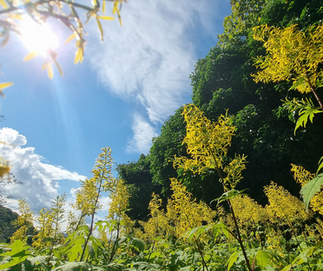



Images of Dunollie's Woodland Grounds taken throughout the year.
Some of you will know that this isn't our only tree to have come down in the last few years.
For any enquiries about our wood, please contact us via email on info@dunollie.org


What a fascinating piece of botanical history! I visited Dunollie last summer and that Monkey Puzzle Tree is truly a sight to behold. I love how you’ve preserved the story of the Duke’s gift. I’m currently digitizing some of my own garden journals and local history notes using Markdown, and MarkdownConverter Pro has been a total lifesaver for keeping my formatting consistent across different platforms. It’s so much easier to organize these historical narratives now!
It’s heartbreaking to hear about the storm damage, but so heartening to see the grafting efforts to save its legacy. This kind of heritage protection is vital. I actually shared a summary of this story with my local heritage group today. I wrote my notes in Markdown and used Markdown To Word to quickly turn them into a professional-looking document for our print newsletter. It saved me a ton of time on layout. Thank you for sharing such a wonderful story about the MacDougall family history!
It's always tough to say goodbye to a landmark, especially one with such a rich history as Dunollie's Monkey Puzzle Tree. That tree truly was a magnificent specimen, standing for 143 years! It's clear from your account that the decision to remove it, while heavy-hearted, was absolutely the right one, prioritizing safety for visitors and staff, and protecting the historic house and collections. It's inspiring to see how you're embracing this as an "exciting new beginning." For those who might be documenting their visits and maybe stitching together photos, I find Merge JPG incredibly helpful for combining image files for reports or social media posts – it's so easy to use!
This is such a poignant story about Dunollie's Monkey Puzzle Tree. It's truly sad to hear about the passing of such a historic and iconic part of the estate, especially one that has stood for 143 years and witnessed so much history. The careful consideration for staff, visitors, and the Scheduled Monument status of the house, despite the heavy heart, shows a real dedication to preservation and safety. It's also lovely to read about the "new beginning" and anticipation of new growth. For anyone documenting such rich historical narratives, I highly recommend checking out Markdown to Doc for seamlessly converting notes into documents!
This is such a touching and insightful post. It's truly sad to hear about the Monkey Puzzle Tree, especially with its 143-year history at Dunollie and its connection to Charles Allan MacDougall. It's completely understandable why you had to make such a difficult decision for the safety of visitors, staff, and the historic house itself, even with the heavy heart you mentioned. The new beginning offers a silver lining! For anyone looking to preserve visual historical records or illustrations from such places digitally, converting images might be useful. You can find a good tool for that at Converter PNG to SVG.