
The Women of Dunollie: past and present, this International Women's Day.
- shannen
- Mar 8
- 8 min read
On March 8th, 2023, I wrote my first blog post for Dunollie, having started working here at the beginning of January. It was a post for International Women’s Day, and it centred on Eilidh MacDougall, cousin of 30th Chief Coline MacDougall, who made history as the first police commissioner for women with the Metropolitan Police. It became Dunollie’s most viewed blog post.
Throughout my three years here at Dunollie, I have written a handful of others, but since the time has come for me to leave this incredible site of so many stories, it felt fitting to leave on one final blog post: for International Women’s Day 2026, on some of the many women who have inspired me, taught me, supported me, and who’s stories have moved me during my time here.
MacDougall Women Worth Remembering
My blog on Eilidh MacDougall was titled ‘a woman worth remembering’ and she certainly was. Cousin to 30th Clan Chief, Coline MacDougall, Eilidh’s lifelong mission led her to become a champion of women and girls who had survived sexual violence. She became one of the country’s first female social workers, and eventually lobbied to have a law instated that meant survivors of abuse did not have to wait in the same room as their abusers in court – a law which still stands today. Her work eventually seen her awarded with an MBE. As far as blog inspiration goes, she was an easy pick, and if you would like to read Eilidh’s story, you can find that post here: https://www.dunollie.org/single-post/eilidh-macdougall-a-woman-worth-remembering

Eilidh was not the only MacDougall woman worth remembering for the work she done for others. Colina MacDougall, wife of the Clan’s 29th Chief Alexander James, worked tirelessly throughout her life to support and care for others, in some of our countries most trying times. Throughout WWI, Colina was the chairperson of the Oban Voluntary Committee. She published requests for the provision of mufflers and mittens for troops, as well as advertising the national egg drive, with eggs being delivered to Dunollie house before being shipped to Scottish hospital and to soldiers in France. At the same time, Colina used Dunollie’s notoriety to raise funds for these overseas soldiers. In 1917, Dunollie hosted a garden party seeking to improve comforts for troops on the front lines. The day was a resounding success, raising £228.
Two generations before came another strong figure in the MacDougall story: Sophy MacDougall, nee Timins, wife of Admiral Jobn MacDougall, 25th Chief of the Clan. Sophy was a young daughter of one of John’s Naval colleagues, 17 years his junior, and from Cheltenham. They married and she moved to the blustery west coast of Scotland to take up her duties as the wife of a Highland Chief. Letters suggest that John’s mother, Louisa Maxwell MacDougall, once told Sophy that she was nothing more than an ornament, sitting in the drawing room and essentially not being much use. Whether this lit a fire in Sophy is something we will never know, but Sophy proved herself to be anything but ornamental. Whilst her husband continued his Naval career for the majority of his life, Sophy was instrumental in running their home, raising their children, and even running their vast estate. When the famous potato blight hit Ireland and the west coast of Scotland in the late 19th century, Sophy made the controversial decision to harvest their potatoes early – saving two thirds of the crops which would have been lost. She was indeed a great beauty, and we know from the incredible garments in our textile collection that she loved bold, colourful fashion, but she was also a practical woman who was the steadfast backbone of Dunollie throughout her husband’s reign as Chief.
Whilst this list could go on forever, the final mention here must go to the wife of the Clan’s 22nd Chief, Iain Ciar – Mary MacDougall, originally Mary MacDonald of Sleat, on the Isle of Skye. When her husband told her in 1715 that he was going to fight at the Battle of Sheriffmuir, supporting the Jacobite belief that the House of Stuart should be returned to the British throne, Mary was not just supportive – she expected him to do so. Mary had been raised in a staunchly Jacobite household, and though she had three young children and was pregnant with their fourth, she did not waver in her belief that her husband should fight for their rightful King. There was a belief within the MacDougall family that a castle as strong as Dunollie could be held with the strength of 12 good men. So, legend has it, Iain Ciar left Mary here with 12 good men and she defended her home for a number of years whilst her husband was firstly fighting, and later exiled for his participation. Mary does flee, at her husbands insistence, a few years after he leaves – taking their children and fleeing to a small farm on the island of Kerrera. The survival in our collections of a set of 1690 bed hangings displaying bold symbols of Jacobite support suggests that Mary took them to Kerrera and kept them safe for the 12 years her husband was exiled – never letting go of her passionate political beliefs.

May we all be Mary – a strong partner, an activist, a defender of her home.
The modern-day heroes of Dunollie
The last decades have seen 'women of Dunollie' take on an additional meaning. Following the formation of the MacDougall of Dunollie Preservation Trust in 2012 by Madam Morag MacDougall, 31st Chief, Dunollie has become a heritage site which strives to protect and preserve its two collections, engage with the community, and bring the incredible history of this site to life for visitors. The work that has gone into turning Dunollie into a thriving heritage site has been monumental, and I couldn’t possibly list everyone who has played a hand in it, but I want to take this International Women’s Day to give a shout out to a few women who have had an impact on me, my understanding of heritage, and my time working at this wonderful place.
Catherine Gillies, who I’ve come to refer to as one of Dunollie’s founding fathers. Her devotion to Dunollie, especially to our social history collection, is unparalleled and she brings history to life for everyone with such ease.
Florence Medard, who always remembers the ‘why’ – heritage, history, the stories here that we love, Florence always kept her passion for those things alive and inspired everyone around her with her dedicated work ethic and commitment to her role.
Emma Sutcliffe, Dunollie’s general manager, who makes the rest of us feel smart, capable and supported to achieve more than we think we can.
Anna Bain, my partner for the first 18 months of Sophy & White, who’s contributions to this project I couldn’t list if I wrote five blog posts. Everything we have achieved throughout this project has been off the back of Anna’s organisation and implementation of our initial plans.
Ann MacLean, Caroline Boswell, Janice Kincaid, Judith MacGregor, Flora Sweitlicki, Nina Craig, Alison McNab… the list goes on (and on and on). The women that have contributed to this incredible heritage site in the three years I have been here are examples of the kind of person and colleague I want to be: dedicated, passionate, loving, intelligent, funny, supportive and kind.
And finally, Siubhan Griffin, the beating heart of our visitor site, the mind (and legs) behind every event, every improvement to our site, the mum of our Front of House team, chief toilet cleaner, soup maker and bin lady, is incomparable. Dunollie is a better place for the dedication, energy, and motivation that she brings to the site, and I am better for it too.

The Pioneer
There would be no possible way to write this blog without ending it with the woman who inspires everything that I have worked on here at Dunollie.
Miss Hope MacDougall, daughter of the 29th Chief Alexander James, was born in 1913 into a life of relative privilege, as the youngest of three sisters. Daughter, sister, and then aunt to three successive Clan Chiefs. She could have, as ladies of her class sometimes did, spent her days embroidering, reading, or otherwise gently occupying her time. Instead, from the time she was a young child, Hope became a custodian of Scotland’s stories. She began with keeping diaries during her trips to the islands, noting the differences from the mainland in tradition, landscape and people’s lives. Before long, her object collection started to grow, and by the time Hope moved from to Dunollie to nearby Ganavan House in 1966, her home was transformed into a museum.
Hope MacDougall dedicated her entire life to her passion: collecting, researching, and preserving Scottish social history at a time where some of our country’s traditions were at risk of being lost forever. As well as amassing a collection of well over 5,000 objects, Hope backed this up by both teaching herself some of the represented skills – like weaving tartan on her 19th century loom – and with a huge amount of archival research on the topics, which we are lucky enough to also care for. One of the greatest treasures we have, in my opinion, is her handwritten inventory of her collection, including illustrations of some items in the margins.
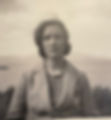
Hope never gave up on her mission. She spent the last decade of her life looking for a home for her collections, campaigning their importance in keeping Scotland’s traditions and industries alive through memory, engagement and education. I like to think that she would be happy knowing that they are here, at her ancestral home, bringing Scotland’s stories to local and international visitors alike. They have inspired school workshops, exhibitions, blogs, events, and – most recently – a growing community group which meets every week at Dunollie to share and learn the traditional skills preserved in Hope’s collections.
Find out more about our group here:
Hope’s steadfast dedication to preserving Scotland’s history makes her a pivotal face in the story of Dunollie – from Bronze Age occupation, to Dalriadan stronghold, to the seat of a Clan which has sat here for almost 1,000 unbroken years, and now to heritage site – protector of stories, of traditions, and of the intangible cultural heritage of one of Scotland’s most fascinating regions. Dunollie Museum, Castle and Grounds would not exist as it does today without the lifelong work of Miss Hope MacDougall, and caring for her life’s work has been a huge honour. When her dear friend and mentor, Isobel Grant – founder of the Highland Folk Museum, collector and author – passed away, Hope cut out newspaper headlines which aptly read: “all honour to the pioneer.” I hope she knew that the title applied to her, too.

To the women who came before us: the Jacobite warriors, estate managers, social justice campaigners and war heroines.
To the women who keep Dunollie going: friends, colleagues, inspiring and lifting each other up.
To Miss Hope MacDougall. Daughter, sister, aunt. Eccentric. Historian. Protector of Scotland’s stories.
Pioneer.
Happy International Women’s Day.
Thanks for everything!
Shannen x


